
Sleeping
Where, why and how to sleep for free
I’m a firm believer that every single one of us has the inalienable right to be able to sleep for free, without the need to have to pay for the privilege. Having said that, I also admit that at the same time you do need to be able to sleep in comfort and security in order to be able to enjoy it.
Many people might think the idea is just plain stupid; delusional even, particularly given the modern and comfortable world we find ourselves in, where a hotel, hostel or campground is usually just a stone’s throw away. Of course, this also comes at a non figuratively speaking cost.
It wasn’t always this way of course. You only have to go back a mere hundred and fifty years or perhaps to the start of the industrial revolution to find a world very different from the one before our eyes now.
Even today, in countries where a nomadic culture still prevails, it’s often perfectly normal to pitch shelter in a different location every few nights and without the need to hand over a wad of sweaty cash in order to do so.
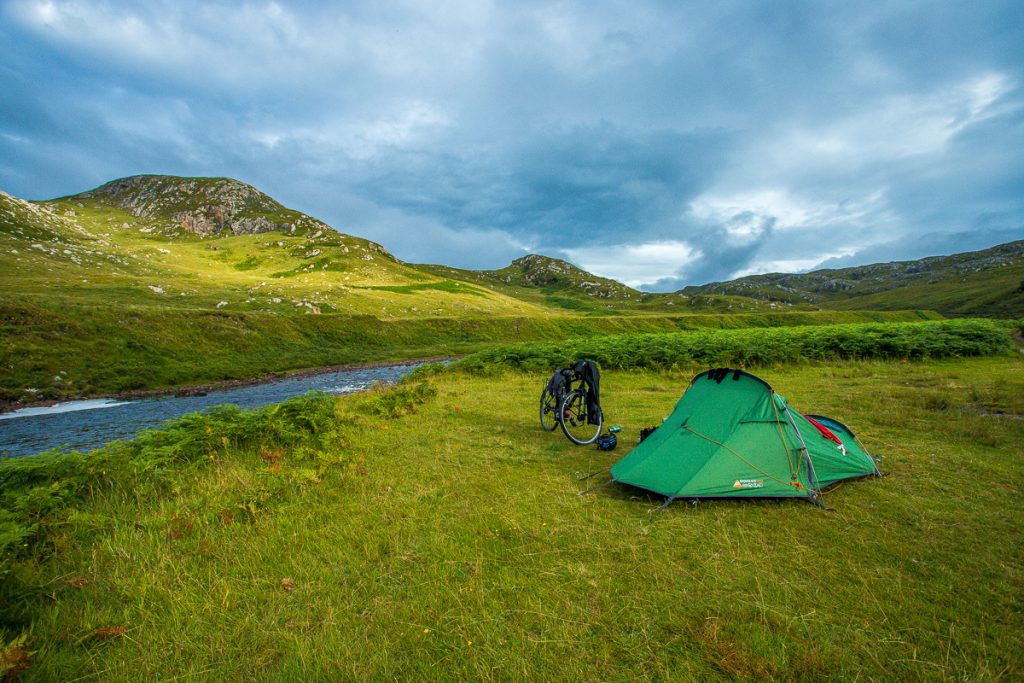
So what changed?
I think we have changed. We’ve become almost too comfortable in today’s world of fluffy bed sheets and instant access to water, electricity and netflix to even think about another way of spending the night. It’s all too easy to forget today that it wasn’t so long ago that we all lived in a completely different way and without the convenience of the above things in our lives. Perhaps we fetched water from a well for our daily needs instead of turning on a tap. Perhaps we used candles to light our homes instead of flicking on a switch and maybe we even wrapped ourselves in clothes to stay warm instead of turning on the central heating. Perhaps our lives then, were infinitely more difficult, brutal and dominated more by our daily chores but I don’t think this is necessarily a bad thing per se.
I’m in no way saying we all need to go and live in a way which harbours visions of caves where the odd woolly mammoth might pop by to say hello but I do think we should remind ourselves that we’re all very privileged to have been born into a world with such an unending list of creature comforts that we all take for granted, perhaps too much.
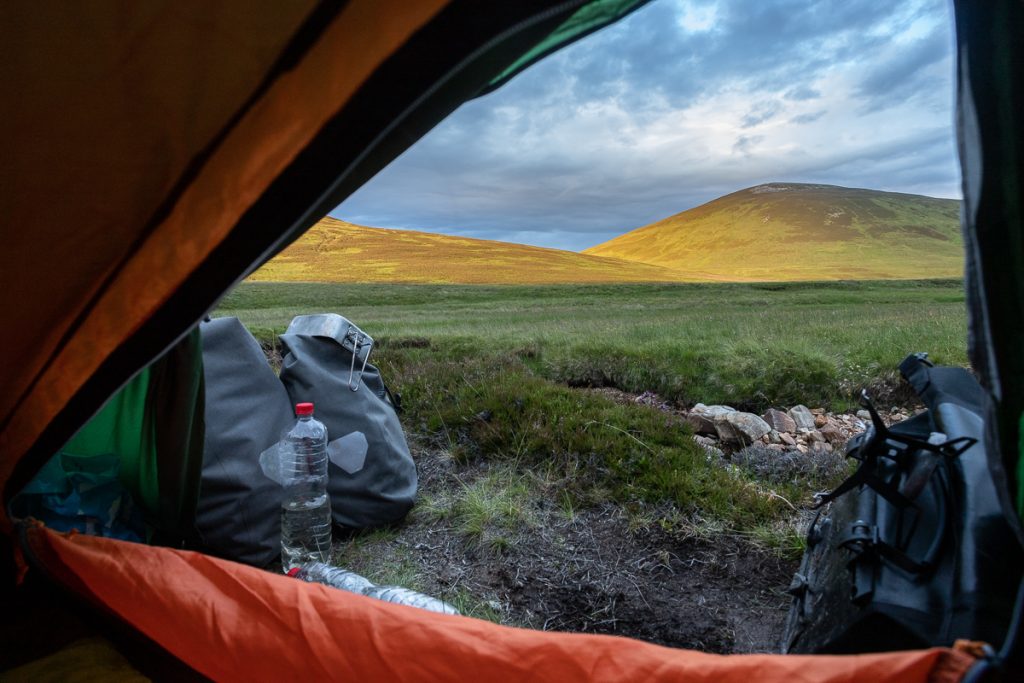
Most people might believe that the many chores we used to undertake out of necessity, but which have now almost completely vanished from our lives, give us more time to enjoy the other things in life but I really don’t see that all too often. I see the vast majority of people, including myself, zoning out to an endless succession of digital nonsense; be it television, Netflix, X or Facebook, and not really doing anything constructive with all that spare time that has been bestowed upon us. Sometimes I think it’s counterproductive and we should try to remember the value of human interaction instead of simply switching off after a hard day’s work. It’s for these reasons that I prefer to travel by bicycle and trek and to sleep outside; It’s nice to flick off that switch and read a book rather than simply zoning out. Sleeping outdoors lends itself well to travelling by bicycle and indeed hiking and is a helpful reminder to myself that I shouldn’t take for granted that which is given to me now.
"I can think of no better feeling than waking up to a beautiful sunset in amazing surroundings and with the realisation that it was all free"
I tend to think back to an encounter I had with an English guy who, having visited his sons in the Netherlands, was cycling back to Dunkirk before catching the ferry back home. I met him just as we were both leaving the ferry, after which I was to cycle back up to Manchester. He told me a story that I could relate to in a way because I tend to sleep for free quite a bit. The night before he was about to cross over into Belgium. As it was turning dark, and with no town in sight, he decided to sleep in a bivvy bag by the side of the canal he was following. Having settled in for the night, along came two police officers who told him that it was unacceptable to sleep there and that he would have to move on before informing him that there was an official campsite a few km’s back.
Now let me just state that the guy was on public land, it was after dusk, in the countryside and he wasn’t even camping, but merely sleeping in a kind of sleeping bag on the grass. I think it’s sad and utterly preposterous that a person must have to find some kind paid accommodation in order to sleep for the night. It’s barking mad really when you actually stop and think about it.
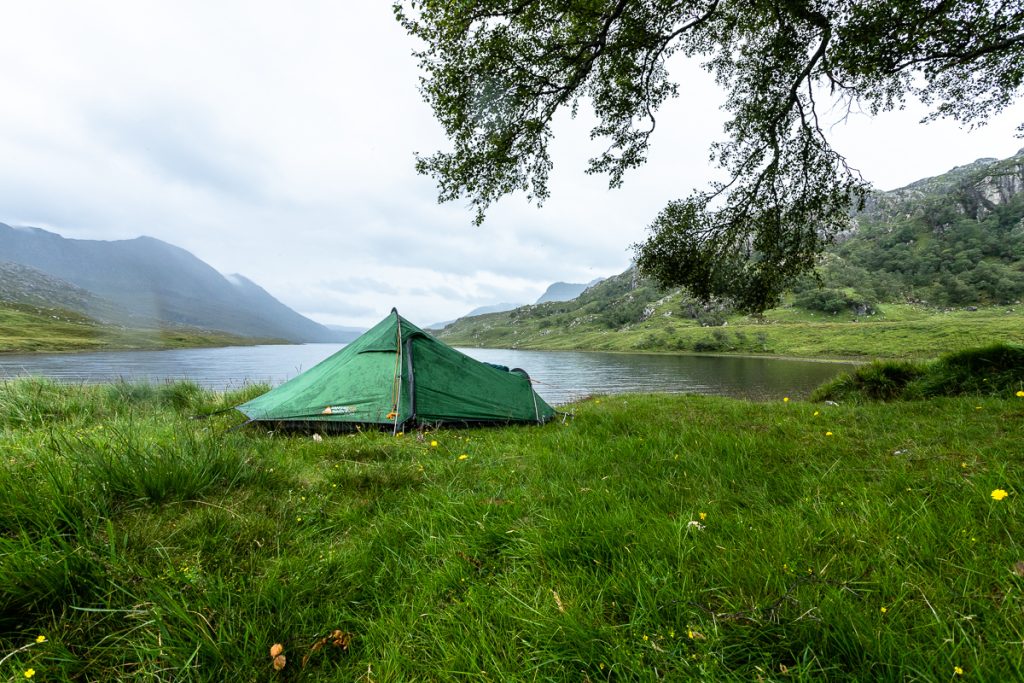
It was on my first trip, in New Zealand in 2010, where I first used a tent as my primary method of housing whilst travelling.
Sure, at first it was a little difficult to find suitable places and maybe even a little scary too but all that soon fades away when you realise that travelling this way is not only free but also uplifting, fulfilling and you soon actually start to embrace it. It gives you confidence and control over your own life and path and it also injects a kind of energy into you that perhaps you didn’t even know you had. It’s amazing and exciting to rise in the morning and not know if your next night’s sleep will be on a beach, a forest, atop a mountain or in full view of an awesome vista. It’s invigorating and rewarding to say the least.
And it's free!
So, how to do it?
Take your time in finding a suitable place and know when to stop
I have always found that the very best time in which to pitch your tent is just before nightfall. Not only does this mean you’ll have really got the most out of the day in regards to distance if that’s your main concern, it also means that you’re very, very unlikely to encounter anyone out and about around at this time, particularly those pesky dog walkers.
Obviously, you can’t just keep cycling until a little before dusk and pray that along come’s a nifty little out of the way spot perfect for a night’s sleep as the world just doesn’t work that way. Instead, try to start looking at least a couple of hours before dusk which basically translates to simply scanning the area that you’re actually travelling through. When doing this, you can often spot a multitude of places and once sure of a certain place, you can simply sit down and begin to make your dinner safe in the knowledge that tonight you’ll have a nice quiet place to lay your head.
Spend a few minutes scouting out the area first
This is probably the most important thing to do when looking at a potential campsite and I can’t stress this enough. The only way to get a good night’s sleep is to feel safe. Dog’s, insects and other animals aren’t usually a cause for concern but locals can be a nuisance. Just have a look around to see if there has been any recent activity in the area. For example, if you see a beer can or a plastic wrapper, take a look to see how faded it is. This is a failsafe method to use in order to ascertain whether or not the area is visited frequently enough to ensure a restful night’s sleep and in years of doing this, I can confidently and proudly boast that only once have I been ‘visited’ and I was so camouflaged anyway that they didn’t even see me!
You can also look for tracks leading in or out of the area, broken branches, lights in the distance and whether or not the area is visible from the road or farm houses etc.
Leave early
This is a pretty easy rule to follow. Sleeping outside changes the way the body clock operates; you sleep when it’s dark and wake up when it’s light. It’s a beautifully simply concept and a healthy one too, thus waking up at 6am is not only feasible but is also done without much effort at all. The trick is to try not to stay there longer than say half 7 or 8 at the very latest. Obviously it depends on your surroundings but the only real consequences of staying later are early morning dog walkers.
Consider cooking earlier on and eating later
Cooking once you have found a place to sleep gives you something to do whilst you wait for an appropriate time to pitch but if you really don’t want to draw any attention to the area you intend to use, it’s usually a better option to cook your meal earlier. You can then keep your food in your mess tin until you wait to eat or simply eat it earlier. Incidentally, the good thing about using mess tins is that they really do keep your food warm for a very long time and so it’s still hot and tasty when you’ve managed to pitch your tent.
Also, if you are in an area where there are houses around or that the only thing between you and the road are some bushes, both noise and light from a burning stove will no doubt cause unwanted attention.
Remember to stock up on water
I always carry about five litres of water no matter what time of the day it is – it’s just too important to let those bottles run dry. However, this is even more important later on in the day. Think about how much water you use at home when cooking, drinking, cleaning the pots and yourself and that’s not even mentioning that all-important coffee and breakfast in the morning. Needless to say, you’ll need a lot and from personal experience, it’s a nightmare if you run out.
In order to make your water go a little further, there are a few things you can do. For example you could use the water left after cooking your pasta to clean the pans and utensils before washing them off afterwards with a little fresh water. Also, one large mouthful of water is often more than enough when brushing your teeth. When washing all that dirt and sweat off at the end of the day, you just have to remember that you are sleeping in a tent on your own and so being super clean kind of goes out the window. For you to feel just comfortably clean to be able to enjoy your night’s sleep, very little water is actually needed. Just get on with it. At the end of the day, two litre’s of water is usually more than enough after you have pitched, provided you have already cooked.